Bookkeeping firm automation: stop chasing clients for documents
The monthly document chase, categorization drafts, and close checklists — how an 8-person bookkeeping firm gets its week back without hiring.
5 min readBy Nick Hayghe

It's the 26th of the month. Your bookkeeper is writing the same email she's written forty times this week: "Hi [client], just checking on those missing bank statements!" The client means to reply. They always mean to reply. The close runs late again, the partner reviews at midnight, and your team spends the last week of every month on nagging instead of accounting. That's not a staffing problem. It's a wiring problem.
This is the bookkeeping playbook from our broader guide, Automation by industry: field services, bookkeeping & agencies. Same four wires — answer fast, schedule clean, follow up on time, handle paperwork — applied to the pain every 8-person firm knows by heart: the chase.
Honesty first: nothing below touches your clients' books without a human approving it. The AI drafts. Your bookkeepers decide. If a vendor ever pitches you a system that posts to the ledger unsupervised, walk away. We'd tell you the same thing.
The chase runs itself
The monthly document chase is the single most automatable chore in a bookkeeping firm. It's repetitive, it's rules-based, and it requires zero judgment — just persistence. That's a software-shaped job.
Here's the wire. Each month, the system checks which documents have arrived for each client — bank statements, receipts, payroll files — against the list each client is supposed to send. The missing ones become a personalized chase email: "Hi Sarah, we're missing your March Chase business statements. Can you drop them in the portal?" Not a mail-merge blast. A specific ask with the specific list.
Then the follow-ups run on a schedule nobody has to babysit. Day 3, day 7, day 12 — each one a little firmer, each one pulling the live missing list so it never asks for something that arrived yesterday. Your bookkeeper checks a dashboard instead of their sent folder: who's late, who needs a personal call, who just needs one more nudge.
> chase: sent → reminded → documents in ✓ day 8
Run the example math. Say a bookkeeper costs you $28/hr fully loaded, and your team spends 40 hours a month across all clients on chasing and checking. That's $1,120 a month — over $13,000 a year — spent on nagging. The reframe: that's not a hiring problem. It's a wiring problem. You don't need another bookkeeper. You need the nagging to not be a human's job.
Categorization starts from a draft
Every month, somebody starts from a blank screen: 400 uncategorized transactions, every one needing a human decision. Most of them aren't real decisions. They're the same office-supply purchase as last month, the same software subscription, the same fuel card.
The AI drafts the categorization from history — "this looks like last month's Adobe charge, categorized as Software" — and your bookkeeper approves or corrects in one pass. The weird ones get flagged for a human look. Plain English: the AI suggests, you decide. The human stays in charge of the books, but the first 80% of the work is already done when they sit down.
Over a year, that's hundreds of hours back. And because the draft is consistent, the books get cleaner — fewer "miscellaneous" buckets, fewer surprises at review.
The chase doesn't need a human's judgment. It needs persistence and a paper trail. That's exactly what software does well.
The close checklist updates itself
The monthly close lives in someone's head — or in a spreadsheet nobody trusts. "Did the payroll tie out? Did we get the loan statement? Did the partner review the write-ups?" On the 30th, it all becomes a scramble.
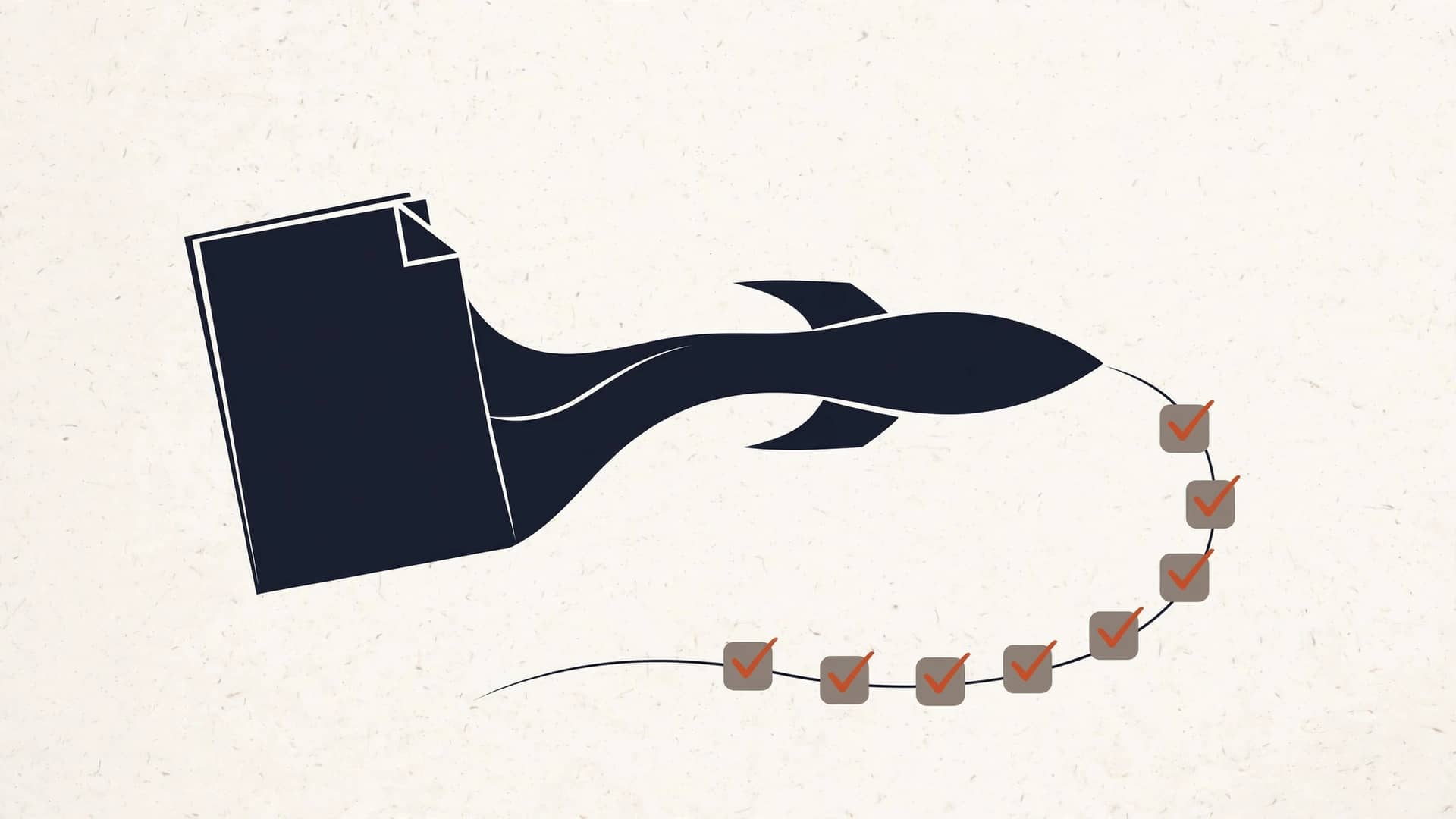
Wire it to the same system that's running the chase. Each client's close checklist fills itself in as documents arrive and categorizations get approved. The bookkeeper opens one view and sees exactly where every client stands: green, yellow, red. The partner sees the same view instead of asking for status updates that eat the bookkeeper's afternoon.
Nobody's asking "are we on track?" anymore, because the answer is on the screen. That's what "schedule clean" means for a firm: not appointments, but a close calendar that runs itself.
And the partner review stops being a rescue mission. When documents arrive on time and categorization drafts are approved as the month goes, the review becomes what it's supposed to be — a review, not a salvage operation. The midnight scramble is a symptom. The chase is the disease. Fix the chase and the 30th takes care of itself.
Email triage for the busy season
Tax season is the fourth wire: answer fast. A shared inbox gets 200 emails a day, and half of them are "quick questions" that are actually the same five questions. The AI drafts replies to the routine ones — "here's the portal link," "here's what we need for the extension" — and your staff approves with one click. The complex ones get flagged for a human.
Nobody's client gets a cold auto-reply. Every message still gets human eyes. But your team stops starting every email from scratch.
The objection we hear most
"My clients expect a personal touch. Won't this feel cold?" Here's the thing: a chase email that arrives on the 2nd with the exact missing list feels more personal than a generic nudge on the 20th. Timeliness is the personal touch. Your clients don't want to hear from your bookkeeper — they want the close done on time so they can run their business. This gives them that.
Get a free tool-stack audit
If you run a bookkeeping firm drowning in the monthly chase, we'll map your tools and show you which wires pay back first. Fixed-price, live in 2–4 weeks, you own everything — and if the math doesn't hold, we'll tell you not to build it. Book a free tool-stack audit.