HVAC dispatch automation: fewer phone tags, fuller schedules
How HVAC shops answer after-hours calls, keep the dispatch board current, text ETAs, and cut no-shows with reminder nudges — without hiring a night dispatcher.
5 min readBy Nick Hayghe
It's 9:40pm on a Saturday in July, and a homeowner's AC just died. Your office line rolls to voicemail. They don't leave a message — they call the next company with an ad. By the time you check voicemail Monday morning, that $650 ticket is someone else's revenue. That's not bad luck. It's a wiring problem.
This is the trade playbook from our broader guide, Automation by industry: field services, bookkeeping & agencies. Here's what the same four wires — answer fast, schedule clean, follow up on time, handle paperwork — look like inside an HVAC shop.
A quick honesty check first: none of this is a robot replacing your dispatcher. It's answering the calls your dispatcher can't take, keeping the board current while they're busy, and texting the customer so your office manager isn't playing phone tag all afternoon. The boring stuff. Done by software.
After-hours calls get answered
The biggest leak in most shops isn't pricing or techs — it's the phone. Nobody's answering at night, nobody's answering at lunch, and every missed call is a job you'll never hear about.
The fix: an AI voice agent that picks up when your team can't. It sounds like a person, asks for the name, address, and what the equipment is doing, and offers real appointment slots pulled from your actual dispatch board — not a "we'll call you back" promise. The customer picks Thursday 8–10am. A job card appears in your system overnight. Your dispatcher walks in Monday to a board that's already filled.
> lead: captured → qualified → booked ✓ 11:48pm
Let's run it as an example. Say your average repair ticket is $650 and you miss three after-hours calls a week in peak season. That's $1,950 a week. Over a 40-week season, call it $78,000 walking to competitors. If the wiring captures half, it pays for a fixed-price Automate build (from $7,500, live in 2–4 weeks) ten times over. We show you this math before you spend a dollar — if it doesn't hold up, we'll tell you not to build it.
And when the call is an emergency the AI can't qualify — no cooling, elderly customer, water leak — it escalates to your on-call tech's cell. The machine handles the routine; humans handle the exceptions. That's the whole philosophy.
The dispatch board stays current
A whiteboard and a group text can run a shop of three. At six or eight techs, the board becomes a second job. Jobs get double-booked. Techs drive across town because nobody saw the address before assigning it. The office manager re-types the same job into three places.
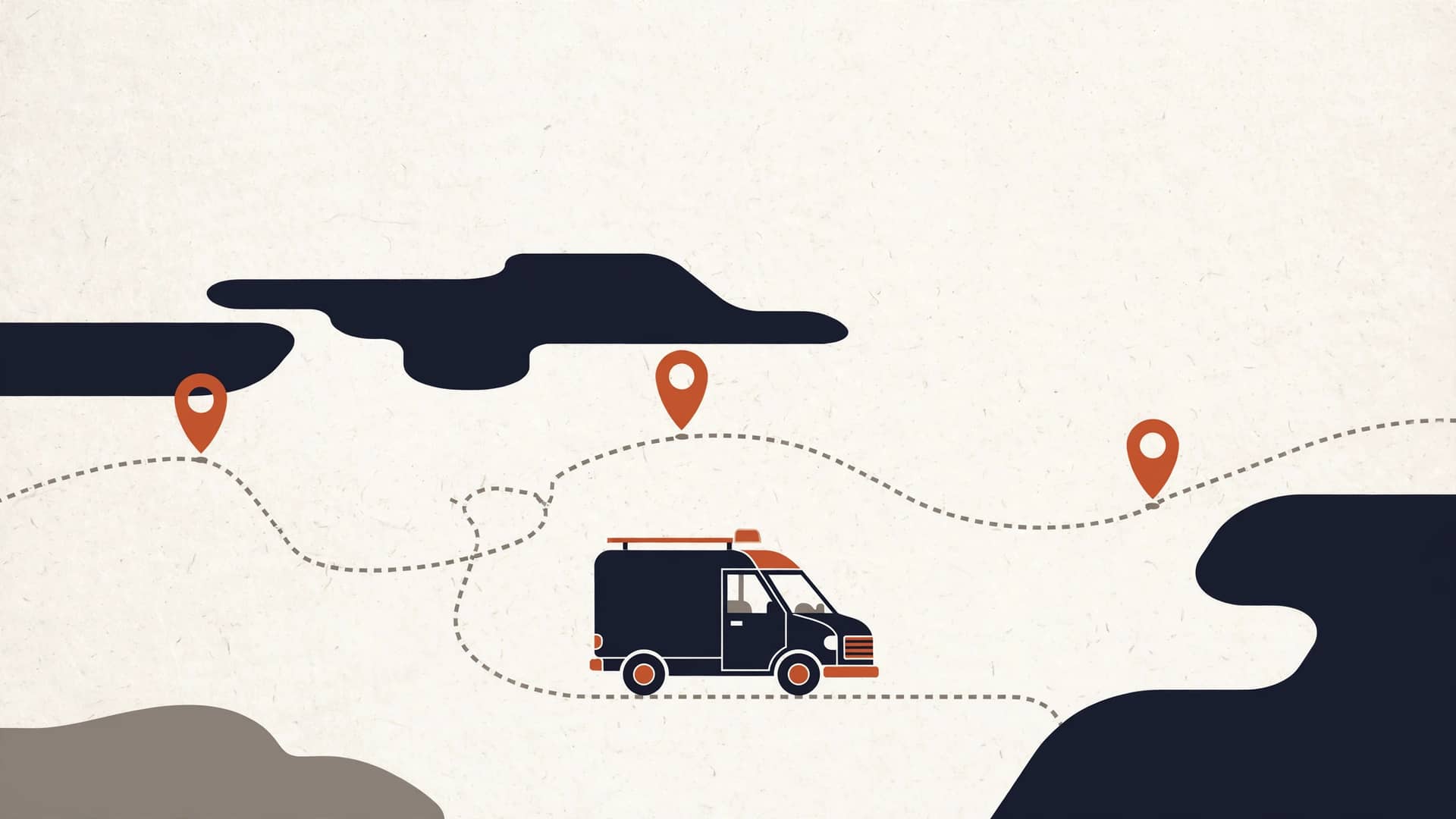
Wiring it up means one source of truth. The call, the web form, and the intake call all land in the same board. The job card carries the customer history — "this unit was serviced in March, capacitor replaced" — so the tech walks in prepared instead of cold. Status changes flow to the office automatically: en route, on site, done. Nobody has to call the office to report they're done; the board knows.
The reframe: that's not a hiring problem. It's a wiring problem. You don't need another dispatcher. You need the dispatcher's tools to stop requiring re-typing.
Every missed after-hours call isn't a voicemail. It's a $650 ticket walking to a competitor.
ETAs get texted without anyone thinking about it
Customers don't hate waiting. They hate not knowing. A text that says "Marcus is 20 minutes out" is the difference between a five-star review and a callback that ties up your office for ten minutes.
This is one of the cheapest wires to run. The GPS ping from the tech's phone becomes a text to the customer at a threshold you set — say, 30 minutes out. Then another at arrival. Your office does nothing. The tech does nothing different. The customer just stops calling to ask where the truck is.
The techs get a clean day
Here's the wire most shops forget: the morning briefing. Before the first truck rolls, each tech gets their day on their phone — job cards in order, customer history on each, parts notes from the last visit. No more calling the office from the driveway because the address in the text didn't match the work order.
When the tech marks a job done, the office knows instantly, the invoice draft fires, and the board fills the next slot. The dispatcher spends the day handling exceptions instead of reporting what already happened. Your techs wrench. Your dispatcher dispatches. Nobody transcribes.
Reminder nudges cut the no-shows
No-show rates of 10–15% are common in the trades. On a $650 ticket, every no-show is a hole in a tech's day that can't be backfilled — and your techs still get paid.
The wire: an automatic text the day before — "Still good for tomorrow 8–10am? Reply YES to confirm." The customer who replies YES shows up more often. The one who doesn't reply gets a follow-up, and if there's still nothing, the dispatcher sees the slot flagged in time to fill it. Nobody's making 20 phone calls the night before.
Say the reminders cut your no-show rate from 12% to 6% on 40 jobs a week. That's roughly two extra kept jobs a week — about $1,300 in revenue — for the cost of text messages. That's the kind of math that makes the build a no-brainer.
The objection we hear most
"Won't my customers hate talking to a robot?" They won't know. It talks and texts like a person, it only handles the routine parts, and anything complicated goes straight to a human. We're not trying to replace the voice of your company. We're filling the gaps where there's currently no voice at all.
Get a free tool-stack audit
If you run an HVAC shop — or plumbing, electrical, or any truck-based trade — we'll look at the tools you already use and map exactly which wires pay back first. Fixed-price, live in 2–4 weeks, you own everything. Book a free tool-stack audit.