Build vs. buy: when off-the-shelf software wins (and when it doesn't)
An honest decision framework: buy when the problem is standard, build when the workflow is your advantage — and the subscription treadmill math most people skip.
5 min readBy Nick Hayghe
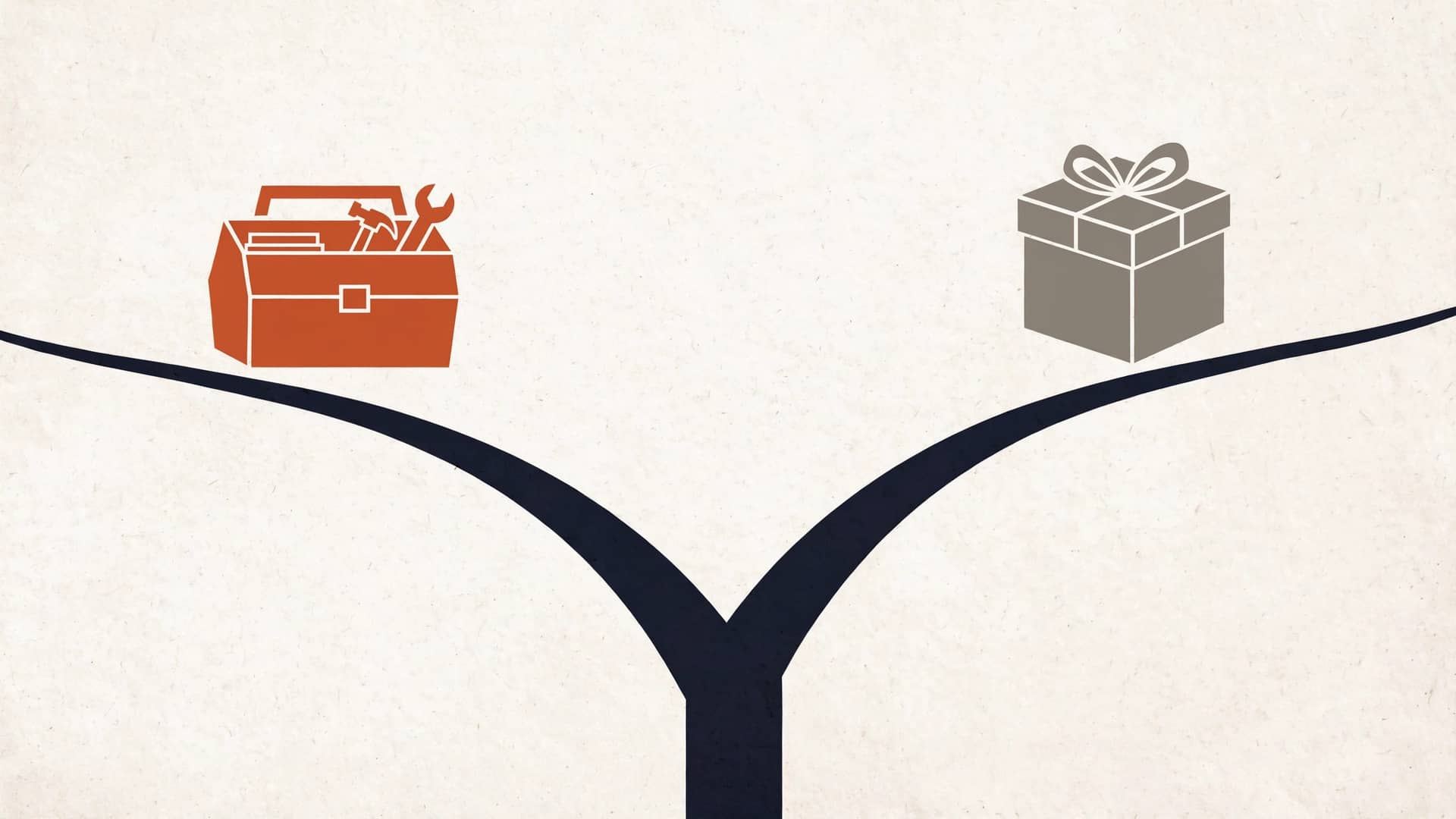
A consultant telling you to buy off-the-shelf software instead of hiring him sounds like a trick. It's not. We do it regularly. This is the honest version of the build-vs-buy decision — when we'd rather you buy, when building wins, and the subscription math most people skip. It sits under the broader guide, What automation actually costs (and what it pays back).
The short version
Buy when the problem is standard. Build when the workflow is the advantage. Payroll is standard. Your dispatch process — the way your best dispatcher juggles three techs, two trucks, and a customer who needs it done by Friday — is the advantage. Nobody sells your dispatch process off a shelf.
When off-the-shelf wins
Buy when all three of these are true: 1. The problem is genuinely standard. Invoicing, payroll, appointment booking, email marketing. Thousands of companies have solved these, and the software is mature. If your requirement is "I need to send invoices," you need QuickBooks, not a consultant. 2. The software does 90%+ out of the box. If the software does 90% of what you need out of the box, buy it. Paying a consultant to rebuild the other 10% is usually vanity. That last 10% is almost always "we've always done it this way," and "this way" is usually just habit, not strategy. 3. You can live with its process. This is the real test. Off-the-shelf software comes with opinions about how work should flow. If you can bend your process to fit — and for standard problems, you usually can — buy. If the software makes your team do stupid things to satisfy its workflow, the price isn't the subscription. It's the daily tax on your people.
The subscription treadmill (do this math)
Here's what people skip: off-the-shelf isn't a purchase, it's a treadmill. Add up the true cost over five years.
Monthly subscription × 12 × 5, plus per-seat costs, plus add-ons, plus the migration cost when you outgrow it.
Say a tool costs $200/month for your team. That's $12,000 over five years. A custom integration that connects the tools you already own might cost $4,000 once and run for five years — $67 a month, and you own it outright.
But run the same math the other way: a $500/month platform with 15 users at $30/seat/month is $5,400 a month, $324,000 over five years. That's not a tool. That's a second employee who never calls in sick but also never gets better.
The question isn't "what does it cost this month?" It's "what does it cost over the life of the decision, and who owns the result?"
| Off-the-shelf | Custom build | |
|---|---|---|
| Upfront cost | Low | Higher |
| 5-year cost | Often higher than you think | Often lower than you think |
| Ownership | Rented; they can raise prices or shut down | Yours; runs as long as you want |
| Fit | Their process, adapted by you | Your process, built for you |
| Speed to live | Days | 2–4 weeks |
Neither column wins on its own. The math decides.
If the software does 90% of what you need out of the box, buy it. Paying a consultant to rebuild the other 10% is usually vanity.
When building wins
Build when:
The workflow is your edge. If the way you run jobs, quote work, or follow up with customers is why people hire you instead of the competitor, don't flatten it into someone else's template. That's the thing worth building around.
You're paying for workarounds. If your team maintains three spreadsheets to make up for what the software can't do, you're already paying for custom software — you're just paying in labor instead of a project fee. Add up the hours. The build usually wins.
The integrations don't exist. Off-the-shelf tools connect to the popular stuff. If your business runs on industry-specific software with no integration marketplace, a custom connection is the only way your tools talk to each other. This is our most common project: simple integrations between tools that were never designed to meet.
The subscription math is ugly. When the five-year treadmill number dwarfs a one-time build cost, building isn't expensive. It's the discount option.
The hybrid answer (most common)
Here's what actually happens most of the time: you buy the standard pieces and build the connections between them.
Keep QuickBooks for accounting. Keep your scheduling tool. Then build the automation that moves a completed job from the scheduler to an invoice in QuickBooks without anyone retyping anything:
> job: completed → invoice drafted → owner notified ✓ 4:02pm
That's the integration-first position: the software you already own does the standard work, and custom automation handles the handoffs where your team's time actually disappears. You don't rebuild what works. You wire it together.
The objection, named
"But what if the consultant just wants to sell me a build?"
Fair. Here's how to protect yourself: ask any consultant which parts of your problem they'd buy off the shelf. If the answer is "none of it," get a second opinion. A consultant who can't name the software they'd use instead of building is a consultant who only sells hammers.
We'll tell you when buying wins. We've done it in audits — told a prospect their problem was a $79/month tool, not a $7,500 project. They bought the tool. Some of them came back later with a problem that actually needed building. Trust compounds.
Get a free tool-stack audit
Bring us your tools and the workarounds your team hates. We'll tell you what's worth buying, what's worth building, and what isn't worth touching. Book a free tool-stack audit.