What business automation actually costs in 2026
Illustrative price bands for automation projects — simple integrations, multi-system workflows, AI builds — and the levers that move a project up or down in price.
5 min readBy Nick Hayghe

No hype here: nobody can quote your automation project without seeing your systems. But you deserve more than "it depends." This post gives you honest, illustrative price bands — what typical projects tend to cost, and what pushes a project up or down the scale. This is a companion to the broader guide, What automation actually costs (and what it pays back), which covers the payback math.
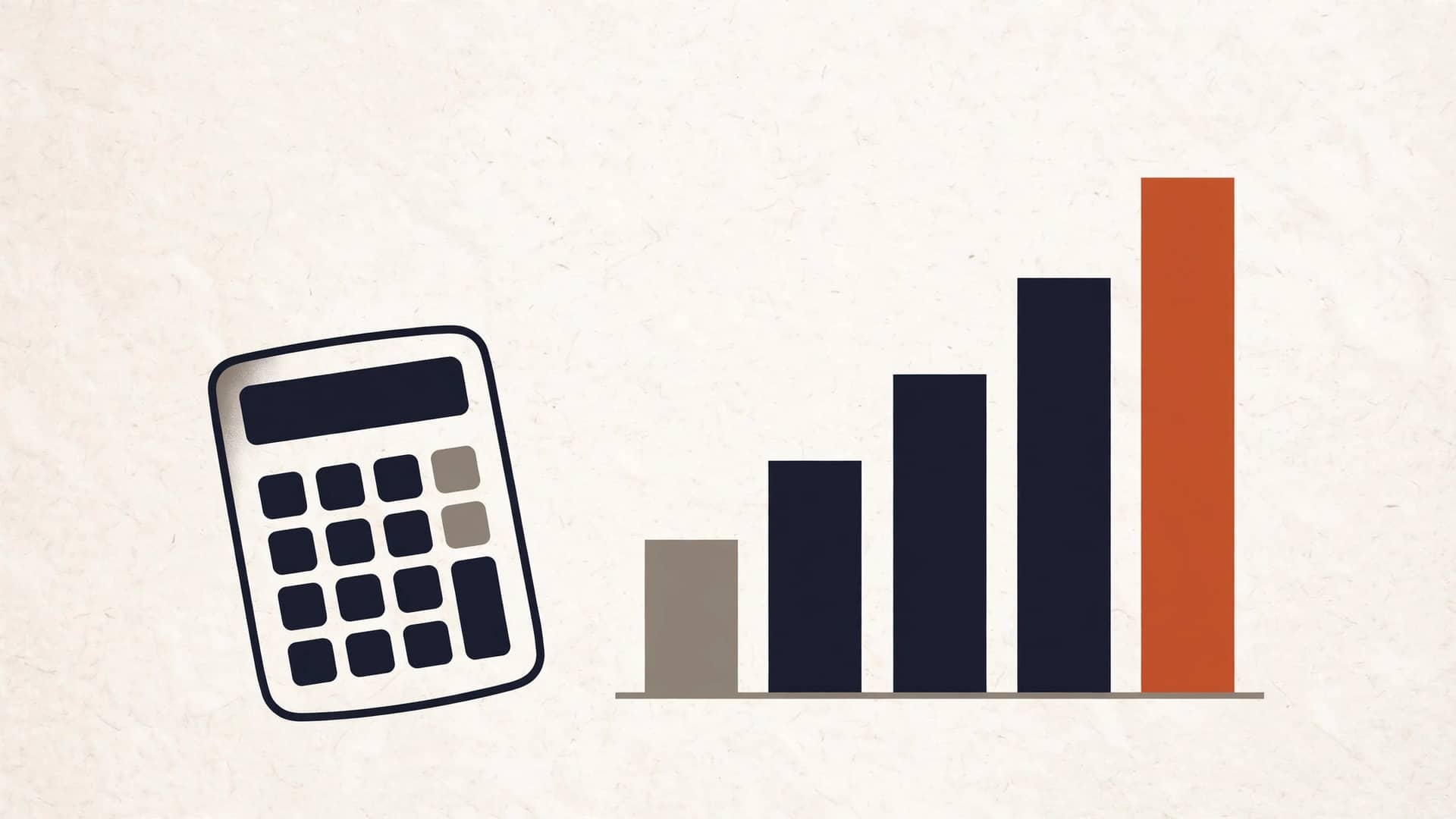
The three bands
Most small-business automation projects land in one of three bands. Think of these as typical and illustrative — your project is its own thing, and a good consultant will tell you where it actually sits before you pay anything.
Band 1: Simple integration — $3,500 to $6,000
Two tools, one job. Your contact form feeds your CRM. Your invoices sync to QuickBooks. Your bookings land on the shared calendar.
This is the bread and butter of small-business automation, and it's where integration-first thinking pays off: most of the value comes from connecting what you already own, not buying something new.
> form: submitted → CRM updated → owner notified ✓ 2:14pm
What's included at this level: connecting the tools, mapping the data between them, testing the normal flow plus the obvious failure modes (what happens when the CRM is down for ten minutes?), and documentation so your team can run it without us.
What pushes it up: more than two systems, messy data that needs cleaning first, or rules like "route to the East team if the zip starts with 7, unless it's a repeat customer." Rules are cheap to write and expensive to get right.
Band 2: Multi-system workflow — $7,500 to $15,000
Now we're following a job across your business: a request comes in, gets scheduled, gets dispatched, gets invoiced, and gets a follow-up — across three or four tools, with humans approving the steps that matter.
This is where small businesses see the biggest returns, because the busywork lives in the handoffs. Nobody's job is "retype the address into the fourth system," but somebody does it every day.
> job: booked → dispatched → completed → invoiced ✓ 4:02pm
What pushes it up: exception handling. The quote that needs manager approval above $2,000. The job that gets rescheduled twice. The customer who pays with two methods. Each exception is a branch in the workflow, and each branch has to be built, tested, and explained. A workflow with three exceptions costs noticeably less than one with twelve.
What pushes it down: clean data and consistent process. If your team already does the job the same way every time — even if they do it by hand — automating it is straightforward. If everyone does it differently, you're paying for us to figure out which way is right before we build.
Band 3: AI build — $12,000 to $25,000+
AI enters when the work needs judgment. Reading a rambling email and extracting the job details. Drafting a quote in your voice from a few notes. Responding to an after-hours lead like a person would, so the 11:48pm inquiry gets an answer at 11:49pm, not Monday at 9.
> lead: captured → qualified → booked ✓ 11:48pm
This band costs more because AI has to be tested like a new employee, not like a piece of plumbing. We run it against real examples, watch where it gets things wrong, tighten it, and run it again. The 95% it handles well is the easy part. The 5% it gets wrong is where the engineering — and the cost — lives.
What pushes it up: the cost of being wrong. If the AI drafts quotes a human approves, mistakes are cheap. If it sends quotes to customers unsupervised, mistakes are expensive, so the guardrails have to be serious. Tell your consultant which one you want; the price difference is real.
What pushes it down: a human in the loop. AI that prepares work for your approval is dramatically cheaper to build safely than AI that acts alone. Most small businesses should start here.
A $4,000 integration that runs for five years costs you $67 a month. That's the math that matters.
What moves any project up or down
Across all three bands, five levers matter most:
- System count. Two tools is simple. Five tools is a project. The testing surface grows with every connection.
- Data quality. Clean data is a one-day job. Dirty data — duplicates, inconsistent formats, missing fields — can add a week before the real work starts.
- Exceptions. The happy path is cheap. Every "except when…" costs real money.
- Approval points. Every place a human has to approve something needs a notification, a review screen, and a fallback for when nobody responds. Each one is real work.
- Who maintains it. A system documented well enough that your own team or your next IT person can run it costs more upfront than one that only the builder understands. It's worth it. You're buying independence, not a dependency.
The number that actually matters
Here's the reframe nobody gives you: don't compare the project price to zero. Compare it to the monthly cost of the problem.
A $4,000 integration that runs for five years costs you $67 a month. What's the manual work it's replacing worth? If it's 8 hours a month at $35/hr fully loaded, that's $280 a month. The integration pays for itself in 15 months and then keeps paying.
That's not a pricing argument. It's a math argument. Automation payback math: a worked example walks through the arithmetic step by step.
How we price
Fixed price, quoted before we start, based on which band you're in and where the levers point. Live in 2–4 weeks. You own the result — code, accounts, documentation, everything. If the project is smaller than you thought, we'll say so, and if it shouldn't be built at all, we'll say that too. When not to automate: we'll tell you ourselves is that conversation in writing.
And when the problem is standard enough that you shouldn't pay a consultant at all — when off-the-shelf software wins — we'll tell you that too. That's Build vs. buy: when off-the-shelf software wins (and when it doesn't).
Get a free tool-stack audit
Bring us your current tools and your biggest time-waster. We'll map where the hours go, tell you which band your problem sits in, and give you an honest number — or tell you not to build it. Book a free tool-stack audit.